
For centuries, the Chakras have fascinated spiritual seekers and wellness enthusiasts with insight into our energetic anatomy and the complex details of the connections between the body, mind, and spirit. Chakras are powerful energy systems that offer profound levels of understanding about ourselves as they unlock the healing potential that is still largely not explored in our times. The significance of chakras is still being validated by the scientists; However, the ancient spiritual traditions has always acknowledged the spinning wheels of energy as an important part of being human.
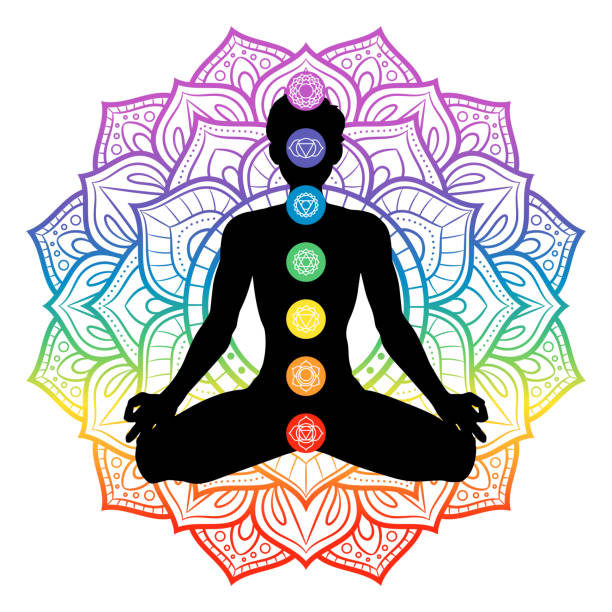
The Historical Roots and Scientific Understanding of Chakras
The concept of chakras originates from ancient Vedic writings, sacred scriptures composed between 1500 and 1000 BC that emphasized the deep connection between physical, mental, and spiritual well-being4. The word “chakra” itself comes from Sanskrit and translates to “wheel” or “disc,” vividly describing these spinning vortices of cosmic energy where matter converges with prana, our essential life force4. Ancient texts like the Upanishads and Tantric traditions, particularly the Shat-Chakra Nirupana and Hatha Yoga Pradipika, established chakras as crucial components for sustaining prana flow through the body’s energy channels or “nadis“4.
From a scientific perspective, researchers have attempted to correlate chakras with anatomical structures within our physical bodies. Several scholars have proposed that chakras align with major nerve plexuses and endocrine glands, including the esophageal, aortic, hypogastric, and pelvic plexuses, as well as the prefrontal cortex and neocortex1. These correlations suggest that what ancient traditions described as energy centers might indeed correspond to crucial physiological systems that govern our bodily functions.
Interestingly, modern physics might offer additional insights into understanding chakras. When we examine the nature of matter and energy, we discover that at certain scales, what appears solid transforms into pure energy3. In this context, chakras can be conceptualized as energy-informational junctions or “routers” that receive and transmit energy-informational waves, facilitating our interaction with the surrounding environment3. Each chakra operates at its unique frequency, filtering and providing the human body with the specific energies it needs from the vast energy-informational field around us3.
The Seven Major Chakras: A Journey Through Your Energy Centers
While the complete human energy system actually comprises 114 chakras according to some traditions, with 112 residing within the physical body and two existing externally, most contemporary practices focus on the seven main chakras aligned along the spine4.
Muladhara: The Foundation of Stability
Located at the base of the spine, the Root Chakra (Muladhara) serves as our energetic foundation. This chakra governs our sense of safety, security, and basic survival needs2. When balanced, Muladhara creates feelings of stability and groundedness, allowing us to face life’s challenges with resilience and strength. The Root Chakra connects us to Earth’s energy, providing the stable foundation upon which we build our entire energetic system.
People experiencing anxiety or persistent feelings of insecurity might benefit from focusing on this chakra. Practices that help balance Muladhara include walking barefoot on natural surfaces, engaging in grounding meditation, and incorporating root vegetables into your diet2. The Root Chakra reminds us that before we can ascend spiritually, we must first establish a solid foundation in the physical world.
Svadhisthana: The Center of Creativity and Pleasure
Just below the navel lies the Sacral Chakra (Svadhisthana), which governs creativity, emotional fluidity, and sensuality. This vibrant energy center influences our ability to experience pleasure, form emotional connections, and express ourselves creatively. Associated with the water element, Svadhisthana embodies qualities of flow, adaptability, and emotional depth.
When this chakra functions optimally, we feel emotionally balanced, creative, and connected to our authentic desires. Imbalances might manifest as emotional volatility, addiction to sensual pleasures, or creative blocks. To harmonize Svadhisthana, consider engaging in creative pursuits like dancing, art, or music, spending time near water bodies, and practicing hip-opening yoga postures that release stored tension in this area.
Manipura: The Power Center
The Solar Plexus Chakra (Manipura) resides in the upper abdomen, governing personal power, confidence, and transformation. Associated with the fire element, this energy center fuels our sense of identity, self-esteem, and willpower. Its very name—“manipura” or “city of jewels” in Sanskrit—suggests the valuable energy concentrated in this region.
A balanced Manipura chakra manifests as healthy self-confidence, clear decision-making abilities, and a strong sense of personal boundaries. When imbalanced, issues with control, anger, or diminished self-worth may arise. Practices that strengthen this chakra include core-focused physical exercises, visualization of golden yellow light filling the solar plexus region, and mindfully setting healthy boundaries in relationships.
Anahata: The Wellspring of Love and Compassion
At the center of the chest lies the Heart Chakra (Anahata), the midpoint of our chakra system that bridges the lower physical-focused chakras with the upper spiritually-oriented energy centers. Anahata governs our capacity to give and receive love, practice compassion, and maintain harmonious relationships with ourselves and others.
The Heart Chakra serves as our center of integration, where seemingly opposing forces—physical and spiritual, personal and universal, masculine and feminine—come into balance2. When Anahata flows freely, we experience profound states of unconditional love, forgiveness, and deep connection with all living beings. Heart-opening yoga postures, practicing random acts of kindness, and spending time in natural settings can all help nourish and balance this essential energy center.
Vishuddha: The Voice of Authentic Expression
The Throat Chakra (Vishuddha), located at the base of the throat, governs communication, self-expression, and our ability to speak our truth. The Sanskrit name means “especially pure,” highlighting the purifying quality of authentic expression. This chakra influences not only our verbal communication but also our capacity to listen deeply and express ourselves creatively.
When Vishuddha functions optimally, we communicate clearly and honestly, express our needs and boundaries effectively, and listen attentively to others. An imbalanced Throat Chakra might manifest as excessive talking, inability to express oneself, or physical issues affecting the throat region. Practices like singing, journaling your thoughts without censorship, and conscious communication exercises can help harmonize this important energy center.
Ajna: The Seat of Intuition and Wisdom
Between the eyebrows sits the Third Eye Chakra (Ajna), our center of intuition, imagination, and higher consciousness. The Sanskrit word “ajna” means “perceive” or “command”, highlighting this chakra’s role in perception beyond ordinary senses. Connected to the pineal gland, which produces melatonin and influences our sleep-wake cycles, Ajna serves as our internal guidance system.
A balanced Third Eye Chakra grants clarity of thought, strong intuition, and the ability to trust inner wisdom even when external evidence seems contradictory. Meditation focusing on this energy center, reducing exposure to artificial light (especially before sleep), and developing mindfulness practices can help activate and balance Ajna, enhancing our connection to intuitive wisdom.
Sahasrara: The Gateway to Universal Consciousness
At the crown of the head rests Sahasrara, the Crown Chakra, representing our connection to divine consciousness and universal wisdom. The Sanskrit name means “thousand-petaled”, symbolizing infinite awareness and cosmic consciousness. Unlike the other chakras, Sahasrara chakra transcends the material elements, marking the point where individual consciousness merges with universal consciousness2.
When the Crown Chakra opens fully, we experience profound states of unity consciousness, recognizing our inherent oneness with all existence. Spiritual practices like meditation, contemplation of philosophical questions, and creating periods of silence and solitude can help activate this highest energy center, facilitating our spiritual evolution and enlightenment.
“Chakras have more than one dimension to them. One dimension is their physical existence, but they also have a spiritual dimension.” — Sadhguru
Integrating Chakra Awareness Into Modern Life
The ancient wisdom of chakras offers remarkable relevance in our contemporary world. By understanding these energy centers, we gain valuable insights into the subtle connections between different aspects of our being—physical, emotional, mental, and spiritual—and can address imbalances before they manifest as more serious issues.
Many factors can obstruct chakra functioning in modern life. Emotional trauma, unprocessed experiences, chronic stress, negative thought patterns, environmental toxins, poor lifestyle choices, and even ancestral or karmic imprints can block energy flow4. These obstructions hinder the movement of prana (life force) throughout our system, potentially resulting in emotional, mental, and physical imbalances that impact our overall wellbeing.
Fortunately, numerous practices can help restore balance to our chakra system. Yoga was traditionally designed with specific postures (asanas) to activate and harmonize different energy centers. Meditation focusing on chakras helps clear blockages and restore energy flow. Sound healing using specific tones or mantras associated with each chakra can facilitate balance, as each energy center resonates with particular vibrational frequencies.
Bridging Ancient Wisdom and Modern Science
The chakra system represents a sophisticated understanding of human energy anatomy that predates modern science by thousands of years. As we continue to bridge ancient wisdom with contemporary research, we discover fascinating parallels between chakras and systems studied by modern science. For instance, the locations of major chakras correspond remarkably well with key components of our nervous and endocrine systems1.
Furthermore, the concept of chakras as energy-informational centers finds interesting parallels in quantum physics, which reveals that what appears as solid matter at one level exists as energy at another3. Just as we’re surrounded by invisible electromagnetic waves from devices like cell phones and Wi-Fi routers—waves that operate on different frequencies we can’t see but that nonetheless affect our environment—chakra energies may simply represent another aspect of the electromagnetic spectrum that influences our wellbeing3.
Whether approached through a spiritual, psychological, or scientific lens, the chakra system provides a comprehensive map for personal growth and healing. By honoring these energy centers, we acknowledge the magnificent complexity of our human experience and move closer to experiencing our fullest potential.
As we continue exploring these ancient energy centers with both reverence for tradition and openness to scientific discovery, the wisdom of chakras remains a powerful tool for elevating our energy and enhancing our experience of life. The journey of discovering and balancing the seven chakras within ultimately leads us toward greater self-awareness, authenticity, and wholeness—a journey well worth taking in our quest for holistic wellbeing.
“What lies behind us and what lies before us are tiny matters compared to what lies within us.” — Henry S. Haskins
Citations:
- https://yogauonline.com/yoga-practice-teaching-tips/yoga-research/yogas-energy-centers-what-science-says-about-the-chakras/
- https://www.ramana-maharshi.org/aligning-the-spiritual-hindu-mythology-on-chakras/
- https://www.learning-mind.com/physics-behind-the-7-chakra-system-and-where-chakra-energy-comes-from/
- https://www.rudraksha-ratna.com/articles/7-chakras
- https://www.kanyalife.com/blogs/blogs/mind-blowing-science-of-the-7-chakras?srsltid=AfmBOopdEd0oXxYNcI9mBFxBpmAmK4JWybSMGEIP6tKpNmyOY8XoSHi-
- https://www.amcollege.edu/blog/balancing-chakras
- https://isha.sadhguru.org/en/wisdom/article/7-chakras-mystical-dimensions-body-seven-chakras
- https://hinduism.stackexchange.com/questions/2641/reference-to-the-7-chakras-in-hinduism
- https://blog.glo.com/2012/05/the-science-of-chakras-real-evidence/
- https://www.patheos.com/blogs/sacredkaleidoscope/2024/01/chakras-cauldrons-the-bodys-spiritual-energy-centers/
- https://www.theamericanreporter.com/the-science-behind-chakras-what-modern-research-says/
- https://simonheather.co.uk/pages/articles/understanding_the_chakras.pdf
- https://consensus.app/home/blog/what-are-the-seven-chakras-for-healing-and-energy/
- https://www.hinduwebsite.com/hinduism/concepts/chakras.asp
- https://www.wisdomlib.org/concept/six-chakras
- https://www.llewellyn.com/journal/article/2537
- https://www.academia.edu/73276267/What_are_the_7_Chakras_A_Comprehensive_Guide_to_the_Energy_Centers_and_their_Effects
- https://www.discovermagazine.com/health/the-science-behind-your-chakras
- https://uploads-ssl.webflow.com/64edf7bb53f5d15c798fe2c5/6550b41a75979089cb7296ef_pijedetetirufokanimi.pdf
- https://hinduism.stackexchange.com/questions/36176/which-scripture-talks-about-chakras-energy-centers-present-in-human
Leave a Reply